Place-of-Service Code 02 vs. 10 in Telehealth Billing
- Ethan Caldwell

- Oct 3, 2025
- 4 min read
Telehealth has rapidly grown into a permanent fixture in healthcare delivery, and with that growth comes added complexity in billing and coding. One of the most common sources of confusion among providers and billing professionals is the proper use of place-of-service (POS) codes 02 and 10. Both relate to telehealth services, yet they serve different purposes depending on where the patient receives care. Getting this right is crucial, as even small errors can lead to denied claims, compliance issues, and unnecessary revenue loss. That’s why understanding these codes—and how they apply in daily practice—is central to effective Telehealth Billing and Coding Services.
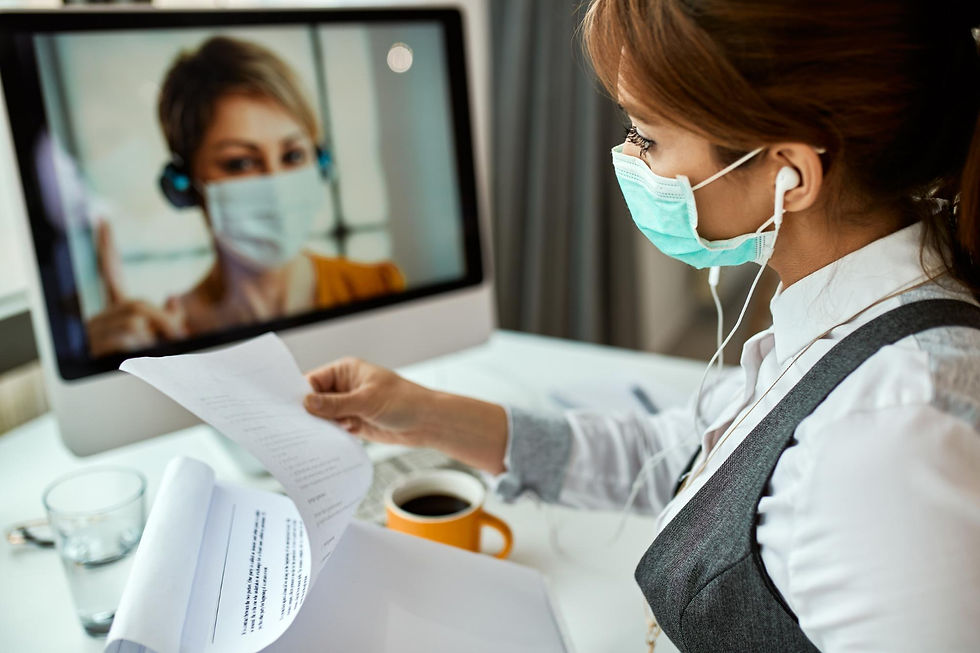
Why POS Codes Matter in Telehealth Billing
POS codes are not just billing details; they are identifiers that tell payers where the patient was located when they received care. This matters because reimbursement policies differ depending on location. A service provided to a patient at home is treated differently from one provided in a clinical or facility-based setting. Accurate POS coding ensures compliance with payer rules and helps providers avoid costly mistakes.
The Role of Telehealth in Modern Care
The pandemic accelerated the adoption of virtual visits, but the convenience of telehealth has kept it in high demand. From follow-up visits to behavioral health sessions, telehealth has proven effective in bridging access gaps. However, its billing rules continue to evolve, making it important for healthcare practices and revenue cycle teams to stay updated.
Understanding POS Code 02
POS code 02 is defined as “Telehealth provided other than patient’s home.” This means the patient is not physically in their home when the telehealth service is delivered. They might be at a physician’s office, hospital outpatient department, or another medical facility, but the provider is delivering the service remotely.
Key points for POS 02:
Indicates a facility-based telehealth encounter.
Often reimbursed differently from at-home telehealth.
Used when patients are in clinics, hospitals, or other professional settings.
Many payers, including Medicare, require POS 02 to identify these visits correctly, which underscores the importance of precise coding.
Understanding POS Code 10
POS code 10 is defined as “Telehealth provided in patient’s home.” Unlike POS 02, this code specifies that the patient is physically located at home when receiving care remotely.
Key points for POS 10:
Specifically applies to at-home telehealth encounters.
Introduced by CMS to differentiate from facility-based telehealth.
Helps ensure proper reimbursement for home-based services.
As home telehealth continues to expand—especially in behavioral health, primary care, and chronic disease management—POS 10 has become a staple for accurate claim submission.
Why the Distinction Matters
On the surface, POS 02 and POS 10 might seem interchangeable since both involve telehealth. However, the distinction is critical because payers reimburse differently depending on where the patient is. Submitting the wrong POS code can lead to underpayment, overpayment (which might trigger audits), or outright claim denials.
Compliance Risks
Regulatory scrutiny around telehealth billing has increased in recent years. With both federal and commercial payers emphasizing compliance, mistakes in POS coding could flag a provider for an audit. Using the correct POS code reduces that risk and promotes transparency.
Revenue Cycle Impact
Accurate coding directly impacts revenue cycle performance. Claims processed with the wrong POS code may require rework, slowing cash flow and increasing administrative burden. For busy practices, ensuring staff understands when to use POS 02 vs. POS 10 is an essential safeguard against avoidable revenue loss.
Practical Examples of POS 02 vs. POS 10
To make it clearer, consider the following examples:
POS 02: A patient visits a rural clinic equipped with telehealth technology. The provider, located in a different city, connects virtually to conduct the appointment. Because the patient is not at home, POS 02 should be used.
POS 10: A patient logs into a telehealth session from their living room using their smartphone. Since the encounter takes place at the patient’s home, POS 10 applies.
These real-world scenarios highlight why the coding distinction is necessary.
Integrating POS Codes into Telehealth Workflows
Healthcare practices that want to minimize errors should integrate POS code checks into their workflows. Training billing staff, updating electronic health records (EHR) systems, and working closely with payers to confirm coding requirements are all effective strategies.
Provider Education
Physicians and staff should be aware that documenting the patient’s location is essential. Without clear documentation, coding teams cannot assign the correct POS code.
Technology Integration
Most modern EHRs and practice management systems allow for automatic assignment of POS codes based on encounter type. Configuring these systems properly can eliminate much of the manual guesswork.
The Broader Context: Telehealth Billing Challenges
POS code assignment is just one piece of the puzzle. Telehealth billing overall has unique challenges, including payer-specific policies, coverage variations, and evolving regulations. Practices that manage specialties such as behavioral health, pediatrics, or OB/Gyn Medical Billing and Coding face additional nuances, as each specialty may have unique telehealth considerations.
Partnering with Experts for Accuracy
Because of the complexity, many practices turn to professional billing partners who specialize in telehealth compliance. These experts bring not only coding knowledge but also an understanding of payer trends and policy changes. For example, RCM Experts has built a reputation for helping providers streamline telehealth billing while staying compliant with federal and commercial requirements.
Best Practices for Telehealth POS Code Accuracy
To recap, here are some actionable tips:
Always document the patient’s physical location at the time of service.
Train staff regularly on payer updates and compliance changes.
Configure EHR and billing systems to default to the correct POS code based on encounter type.
Audit claims periodically to ensure codes are used correctly.
Looking Ahead: The Future of Telehealth Billing
As telehealth becomes more integrated into standard care, coding requirements will likely continue to evolve. The distinction between POS 02 and POS 10 may grow even more significant as payers refine reimbursement policies. Staying proactive and informed will give providers a clear advantage.
Conclusion
The difference between POS code 02 and POS code 10 in telehealth billing may seem small, but its impact is significant. These codes ensure that payers recognize whether the patient was at home or another facility during the encounter, which directly affects compliance and reimbursement. By mastering these distinctions, providers protect their revenue cycle, avoid compliance risks, and deliver a smoother patient experience. For practices seeking additional support in navigating these complexities, working with experienced Medical billing services providers like RCM Experts can make all the difference.


Comments