Compliance Standards Followed by Billing Companies
- Ethan Caldwell

- Jun 22
- 4 min read
Healthcare billing is about much more than submitting claims and posting payments. Medical billing companies operate within a highly regulated environment where accuracy, privacy, security, and ethical practices are essential. Every claim processed, patient record accessed, and payment collected must comply with industry regulations and payer requirements. As healthcare regulations continue to evolve, a medical billing company must maintain strict compliance standards to protect both healthcare providers and patients.
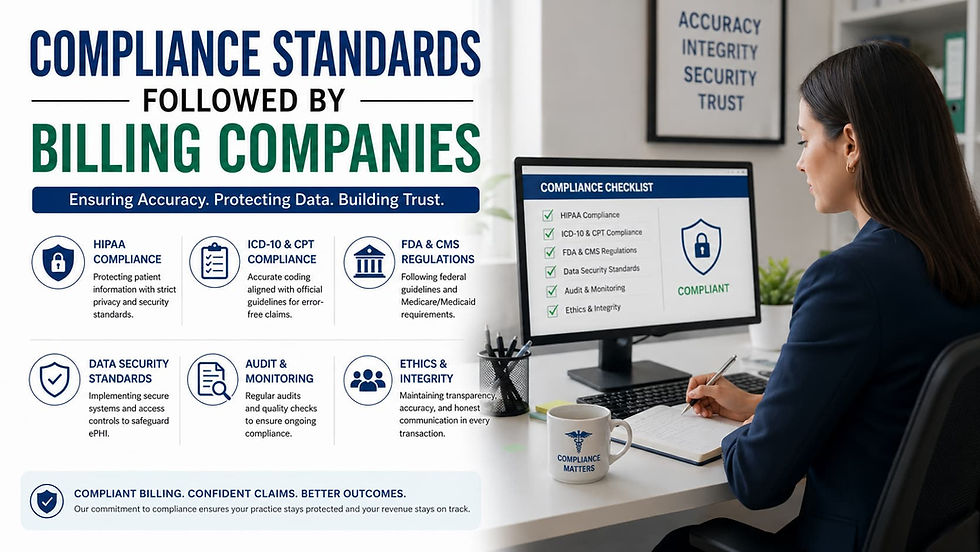
Compliance serves as the foundation of effective revenue cycle management. It helps prevent billing errors, reduces the risk of audits and penalties, protects sensitive patient information, and supports accurate reimbursement. Understanding the compliance standards followed by billing companies can help healthcare organizations select reliable partners and maintain confidence in their billing operations.
Understanding Compliance in Medical Billing
What Is Medical Billing Compliance?
Medical billing compliance refers to adherence to healthcare laws, regulations, payer guidelines, and industry standards that govern billing and reimbursement activities.
Compliance helps ensure:
Accurate claim submission
Ethical billing practices
Patient data protection
Regulatory adherence
Financial transparency
Organizations that prioritize compliance reduce operational risks.
Why Compliance Matters
Healthcare billing errors can lead to claim denials, payment delays, audits, and legal consequences.
Strong compliance programs help minimize these risks while supporting efficient revenue cycle management.
Role of Billing Companies
Billing companies act as an extension of healthcare providers and must follow the same regulatory requirements that govern healthcare organizations.
Patient Privacy and Data Protection Standards
Protecting Patient Information
One of the most important responsibilities of billing companies is safeguarding patient information.
This includes protecting:
Medical records
Insurance information
Financial data
Personal identifiers
Strict security measures help prevent unauthorized access.
Access Control Procedures
Billing organizations typically limit access to sensitive information based on job responsibilities.
Controlled access helps strengthen data security.
Secure Data Management
Secure storage, transmission, and handling of patient information are essential compliance requirements.
Organizations often implement advanced security protocols to reduce risks.
Accurate Coding and Billing Compliance
Following Coding Guidelines
Medical billing companies must ensure that diagnosis and procedure codes are reported accurately.
Coding accuracy supports:
Proper reimbursement
Compliance with payer requirements
Reduced claim denials
Audit readiness
Incorrect coding can create significant compliance concerns.
Documentation Support
Claims should always be supported by sufficient clinical documentation.
Billing teams verify that documentation aligns with submitted claims whenever possible.
Avoiding Billing Errors
Compliance programs focus on preventing common issues such as:
Duplicate billing
Inaccurate coding
Unsupported services
Incomplete claims
Preventive measures improve claim quality.
Insurance Payer Compliance Requirements
Adhering to Payer Policies
Insurance carriers establish specific billing guidelines that providers and billing companies must follow.
These requirements may include:
Coverage policies
Authorization rules
Claim submission deadlines
Documentation standards
Compliance helps ensure smoother reimbursement.
Managing Contractual Obligations
Billing companies often assist providers in meeting payer contract requirements and reimbursement policies.
Monitoring Policy Changes
Insurance rules change frequently.
Billing teams must remain informed about updates that affect claim processing and reimbursement.
Fraud Prevention and Ethical Billing Practices
Preventing Fraudulent Activities
Compliance programs are designed to prevent activities that could be considered fraudulent or abusive.
Examples include:
Billing for services not provided
Misrepresenting diagnoses
Duplicate claims
Improper reimbursement requests
Ethical billing practices are essential.
Supporting Accurate Reporting
Claims should accurately reflect the services performed and the patient's medical condition.
Honest reporting protects both providers and patients.
Internal Oversight
Many billing companies implement oversight procedures to identify and address potential compliance concerns.
Internal Auditing and Monitoring
Conducting Regular Audits
Internal audits help evaluate billing performance and compliance effectiveness.
Audits often review:
Coding accuracy
Documentation quality
Claim submission practices
Payment posting procedures
Routine reviews help identify improvement opportunities.
Identifying Risk Areas
Audit findings can reveal recurring issues that require corrective action.
Early identification helps prevent larger compliance problems.
Continuous Improvement
Compliance monitoring supports ongoing process improvement and staff development.
Employee Training and Education
Ongoing Compliance Training
Healthcare regulations and payer requirements continue to evolve.
Billing staff require regular training to stay current with:
Coding updates
Regulatory changes
Documentation requirements
Security practices
Education strengthens compliance efforts.
New Employee Onboarding
Comprehensive onboarding programs help ensure that new team members understand compliance expectations from the beginning.
Performance Evaluation
Organizations often assess employee performance to ensure compliance standards are being followed consistently.
Security Standards in Medical Billing Operations
Data Security Measures
Billing companies implement security safeguards to protect sensitive information from unauthorized access.
Common measures include:
Secure networks
Encryption technologies
User authentication
Activity monitoring
These controls help reduce cybersecurity risks.
Risk Assessments
Periodic risk assessments help organizations identify vulnerabilities and strengthen security programs.
Incident Response Planning
Preparedness plans help billing companies respond quickly and effectively if security incidents occur.
Documentation Retention and Record Management
Maintaining Accurate Records
Proper recordkeeping is essential for compliance and audit readiness.
Billing companies maintain documentation related to:
Claims
Payments
Adjustments
Correspondence
Insurance activity
Supporting Audit Requests
Well-organized records help organizations respond efficiently to payer reviews and audits.
Retention Policies
Compliance programs often include structured record retention procedures to meet regulatory requirements.
Best Practices for Maintaining Compliance
Establish Written Policies
Documented compliance policies provide guidance for employees and promote consistency.
Monitor Regulatory Changes
Staying informed about industry updates helps organizations remain compliant.
Encourage Accountability
A culture of accountability supports ethical billing practices and regulatory adherence.
Conduct Regular Reviews
Ongoing evaluations help ensure that compliance programs remain effective and responsive to changing requirements.
Frequently Asked Questions
Why is compliance important for medical billing companies?
Compliance helps protect patient information, ensure accurate billing, reduce legal risks, and support proper reimbursement.
What are the most common compliance concerns in medical billing?
Common concerns include coding errors, documentation deficiencies, privacy violations, billing inaccuracies, and failure to follow payer requirements.
How do billing companies maintain compliance?
They use staff training, internal audits, written policies, security measures, monitoring programs, and ongoing education.
Why are internal audits important?
Audits help identify errors, improve processes, reduce risks, and strengthen overall compliance performance.
How does compliance affect reimbursement?
Accurate and compliant billing practices improve claim acceptance rates, reduce denials, and support timely reimbursement.
Compliance is a critical component of successful healthcare revenue cycle management. Medical billing companies must follow strict standards related to privacy, security, coding accuracy, ethical billing, and regulatory requirements to protect providers and patients alike. By implementing strong compliance programs, conducting regular audits, and maintaining ongoing staff education, billing organizations can reduce risks and improve operational performance. Healthcare providers that partner with a reliable Medical billing company can benefit from compliant billing practices, improved reimbursement outcomes, and greater confidence in their revenue cycle operations.


Comments